
Kheti ke shabd
Dalo is taro, yaqona is kava, a ute is a pickup and a header is a combine. Plain explanations of the farm and sale words used in Fiji and across the REALM network.
63 words so far. Each one shows where it is mostly used and what it is called elsewhere. Missing a word? Tell us and we'll add it.
A
- Acre
-
Used in: America, Canada (and older titles in Australia and NZ)
A unit of land area: about 0.405 hectares, or 4,047 square metres. One hectare is about 2.47 acres.
- Agistment
-
Used in: Australia, New Zealand
Paying to graze your livestock on someone else's land for a while, usually charged per head per week.
Also called: Custom grazing or pasture lease (America, Canada)
- AUM (animal unit month)
-
Used in: America, Canada
A grazing measure: the forage one mature cow (traditionally about 1,000 lb, with or without a calf) eats in a month. Used to set stocking rates and grazing leases.
B
- Backgrounding
-
Used in: America, Canada, Australia
Growing weaned calves on pasture or forage until they are heavy enough to go to a feedlot or be finished.
- Bula
-
Used in: Fiji
The everyday Fijian greeting: hello, welcome, and literally "life". You will hear "Bula vinaka" (a warm hello) and "Ni sa bula" (a more formal greeting) all over Fiji.
- Bushel
-
Used in: America, Canada
A grain measure. It is a volume, but grain is traded by a standard weight per bushel that depends on the crop - for example 60 lb for wheat and soybeans, 56 lb for corn.
C
- c/kg lwt and c/kg cwt
-
Used in: Australia
How Australian cattle and sheep prices are quoted: cents per kilogram of live weight (lwt), or of carcase weight (cwt) after dressing. Not to be confused with the American cwt (hundredweight).
Also called: $/cwt (America, Canada)
- Cane belt
-
Used in: Fiji
The sugar cane growing areas of western Viti Levu (around Ba, Lautoka, Nadi, Sigatoka and Rakiraki) and around Labasa on Vanua Levu, where most of Fiji's cane farms are.
- Cane cutting gang
-
Used in: Fiji
A group of cutters who harvest sugar cane for a set of neighbouring farms during the crushing season, traditionally led by a sirdar who organises the work and the delivery of cane to the mill.
Also called: Harvesting crew
- Carcase weight
-
Used in: Australia, NZ (spelled "carcass" in America, Canada)
The weight of an animal after slaughter and dressing (hide, head, feet and organs removed).
Also called: Dressed weight, hot carcass weight
- Clearing sale
-
Used in: Australia, New Zealand
An on-farm auction of machinery, tools, equipment and sometimes stock - often when a farm is sold, leased out or someone retires.
Also called: Farm auction or estate sale (America, Canada)
- Copra
-
Used in: Fiji and the Pacific
The dried meat (kernel) of the coconut, sold to be pressed for coconut oil. Copra is an important source of cash on many of Fiji's outer islands.
- Crushing season
-
Used in: Fiji, Australia
The months when the sugar mills are running and cane is cut and delivered for crushing. In Fiji it usually runs from about May to December.
- Cwt (hundredweight)
-
Used in: America, Canada
In America and Canada, 100 lb (about 45.4 kg). US cattle prices are usually quoted in dollars per cwt. The old British hundredweight is 112 lb.
D
- Dalo
-
Used in: Fiji
Taro: a root crop grown for its starchy corm, a staple food in Fiji and an important export crop. The young leaves are cooked as rourou.
Also called: Taro (most places), kalo (Hawaii)
- Dispersal sale
-
Used in: Everywhere
The sale of a whole herd or flock, for example when a farmer retires or changes enterprise.
- Dressing percentage
-
Used in: Everywhere
Carcase weight divided by live weight, times 100. It varies with the animal, how full it was and how it is processed.
Also called: Yield
- Dry matter (DM)
-
Used in: Everywhere
What is left of a feed once all the water is taken out. Feed needs and feed tests are usually given in dry matter, so wet feeds like silage go less far per tonne than hay or grain.
- DSE (dry sheep equivalent)
-
Used in: Australia
A way to compare the feed needs of different stock: roughly what one mature, non-breeding sheep needs to keep its weight. Larger or breeding animals count as several DSE.
Also called: Stock unit (New Zealand), animal unit (America, Canada)
F
- Feeder cattle
-
Used in: America, Canada
Young cattle sold to be grown out or fattened further, rather than for slaughter straight away.
Also called: Store cattle (Australia, New Zealand)
- Feedlot
-
Used in: Everywhere
A yard where cattle (or sheep) are fed a grain-based ration for a set number of days to finish them for market.
- Finished cattle
-
Used in: Everywhere
Cattle that have reached market weight and condition and are ready for processing.
Also called: Prime or fat cattle (Australia, New Zealand), fed cattle (America)
- Freehold
-
Used in: Australia, New Zealand, Fiji
Owning land outright, with no end date - as opposed to leasehold, where you hold the land for a set term.
Also called: Fee simple (America, Canada)
H
- Hammer price
-
Used in: Auctions everywhere
The winning bid when the auctioneer's hammer falls - before any buyer's premium, GST, VAT or other charges.
- Header
-
Used in: Australia
The machine that cuts, threshes and cleans grain crops in one pass. In America "header" usually means just the front that cuts the crop.
Also called: Combine or combine harvester (America, Canada, New Zealand)
- Hectare (ha)
-
Used in: Australia, New Zealand, Fiji (and alongside acres in Canada)
A metric unit of land area: 10,000 square metres, or about 2.47 acres. 100 hectares make one square kilometre.
- Heifer
-
Used in: Everywhere
A young female bovine that has not yet had a calf (some markets also use it for a cow with her first calf).
I
- iTaukei land
-
Used in: Fiji
Land owned by Fiji's indigenous landowning units. It covers most of Fiji and is generally leased (through the iTaukei Land Trust Board) rather than sold.
K
- Koro
-
Used in: Fiji
A Fijian village. Each koro has a headman (turaga ni koro) who looks after village matters and welcomes visitors.
L
- Leasehold
-
Used in: Everywhere
Holding land or a building for a set number of years under a lease, rather than owning it outright.
- Lot
-
Used in: Auctions everywhere
One item or group of items sold together at an auction, each with its own lot number.
- Lovo
-
Used in: Fiji
A traditional earth oven: food wrapped in leaves is cooked on hot stones in a pit, often for celebrations and church or village gatherings.
Also called: Earth oven, umu (Samoa, Tonga), hangi (New Zealand)
M
- Mataqali
-
Used in: Fiji
A Fijian clan or landowning group within a village. Much iTaukei land is held by mataqali and leased through the iTaukei Land Trust Board.
- ME (metabolisable energy)
-
Used in: Australia, New Zealand, UK
The energy in a feed that an animal can use, usually given in megajoules per kilogram of dry matter (MJ/kg DM) on a feed test. It is used to compare feeds and to work out how much energy stock are getting.
Also called: Often compared with TDN or NE in America and Canada
N
- NAIT
-
Used in: New Zealand
The National Animal Identification and Tracing scheme: cattle and deer are tagged with RFID ear tags and registered, and their movements recorded.
- NLIS
-
Used in: Australia
The National Livestock Identification System: cattle carry electronic (RFID) ear tags, and sheep and goats are identified too, so animals can be traced from property to property.
P
- Paddock
-
Used in: Australia, New Zealand
A fenced area of a farm used for grazing or crops.
Also called: Field or pasture (America, Canada)
- Passed in
-
Used in: Australia, New Zealand
When a property or item at auction does not reach the seller's reserve price, so it is not sold under the hammer. Talks with the highest bidder often follow.
Also called: No sale / bought in
- PTO (power take-off)
-
Used in: Everywhere
The splined shaft on a tractor that drives implements like mowers, balers and pumps. Check the PTO speed (540 or 1,000 rpm) matches the implement.
R
- Reserve price
-
Used in: Auctions everywhere
The lowest price the seller will accept. It is usually kept secret; if bidding does not reach it, the item is passed in.
- Rourou
-
Used in: Fiji
Young dalo (taro) leaves, cooked - often in coconut cream - as a vegetable dish.
S
- Sevusevu
-
Used in: Fiji
The customary presentation, usually of yaqona (kava) roots, made to the chief or headman when you visit a village or ask for something. Accepting the sevusevu welcomes you into the village.
- Silage and haylage
-
Used in: Everywhere
Grass or crops cut green and stored airtight (in pits, bunkers or wrapped bales) so they ferment and keep. Haylage is drier than silage; hay is dried in the paddock before baling.
- Sirdar
-
Used in: Fiji
The leader of a cane cutting gang, who organises the cutters and the harvest timetable for the group's farms.
- Station
-
Used in: Australia, New Zealand
A large pastoral property that runs cattle or sheep, often over thousands of hectares.
Also called: Ranch (America, Canada)
- Steer
-
Used in: Everywhere
A male bovine castrated when young, usually raised for beef.
Also called: Bullock (for older steers in Australia, NZ and Britain)
- Stocking rate
-
Used in: Everywhere
How many animals a piece of land carries over time - for example DSE per hectare in Australia or AUMs per acre in America.
- Sulu
-
Used in: Fiji
A wrap-around cloth worn by men and women in Fiji. Wearing one (covering the knees) is a respectful choice when visiting a village.
Also called: Sarong, lavalava (Samoa)
T
- Talanoa
-
Used in: Fiji and the Pacific
An open, respectful conversation or dialogue, often used for community meetings and for talking through problems together.
- Tavioka
-
Used in: Fiji
Cassava: a hardy root crop grown on farms and in home gardens all over Fiji, eaten boiled, baked or in a lovo.
Also called: Cassava, manioc, yuca
- Three-point linkage
-
Used in: Australia, New Zealand
The hydraulic arms on the back of a tractor that lift and hold implements. Categories (1 to 4) must match between tractor and implement.
Also called: Three-point hitch (America, Canada)
- Tonne
-
Used in: Australia, New Zealand, Fiji, Canada
A metric tonne is 1,000 kg. A US "short" ton is 2,000 lb (about 907 kg) and a British "long" ton is 2,240 lb (about 1,016 kg).
Also called: Metric ton
- TSW (thousand seed weight)
-
Used in: Everywhere
The weight in grams of 1,000 seeds. It differs between crops, varieties and seed lots, so it is used to turn a target number of plants into a seeding rate in kg/ha.
Also called: Seed weight, 1,000-kernel weight
- Turaga ni koro
-
Used in: Fiji
The village headman, chosen by the village to look after its day-to-day affairs. Visitors usually ask for him first.
U
- Ute
-
Used in: Australia, New Zealand, Fiji
A light vehicle with an open tray or tub at the back - the everyday farm vehicle.
Also called: Pickup or pickup truck (America, Canada)
- Uvi
-
Used in: Fiji
Yam: a traditional root crop with deep cultural importance in Fiji, often presented at ceremonies.
Also called: Yam (Dioscorea)
V
W
- Water rate
-
Used in: Everywhere
How much spray mix (water plus product) a sprayer puts out per hectare or acre, usually in L/ha or gal/ac. The product label often gives the range to use; calibrating the sprayer checks what it really puts out.
Also called: Carrier volume, spray volume, gallons per acre (America)
- Weaner
-
Used in: Australia, New Zealand
A young animal recently taken off its mother's milk - for cattle usually around 6 to 10 months old.
Also called: Weaned calf or lamb (America, Canada)
Y
- Yaqona
-
Used in: Fiji
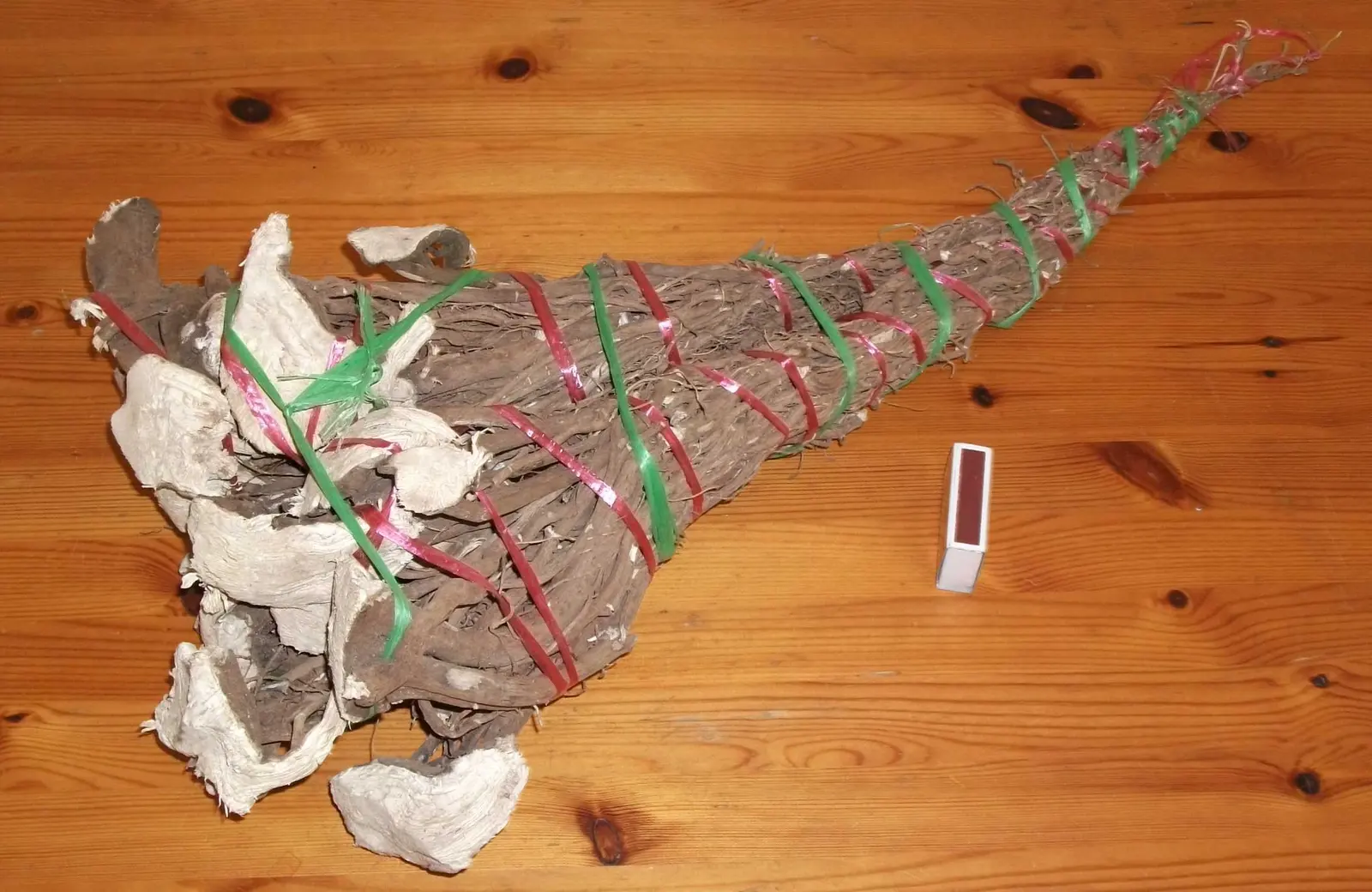
Kava: a drink made from the ground root of the kava plant (Piper methysticum), shared at ceremonies and gatherings. Kava is also an important cash crop, for example on Kadavu and Taveuni.
Also called: Kava, grog (Fiji English)
- Yearling
-
Used in: Everywhere
An animal about one to two years old. In Australian cattle markets yearlings are young cattle sold at lighter weights.
No word matches that yet. Try the site search, ask the Chat Assistant (bottom right) or tell us which word to add.
General explanations only - rules, fees and measures differ between countries, states and sale yards. For a sale or contract, check the terms with the agent, auctioneer or seller.
Need the numbers too?
Convert hectares and acres, c/kg and $/cwt, tonnes and tons, spray rates and more with our free farm unit converter.